KIOS: Eating, Part 13: Drinks (the details)

This post is part of my series, “Kickin’ It Old Skool: Why and How We Are Old-Fashioned” or KIOS for short.  If you’re new to the series, please read my disclaimer before continuing on.  I’m keeping a table of contents to this series here so you can see what I’ve already written about and what more there is to come.

I never expected explaining what we eat to take so many posts!  I guess it’s not until you try to list everything you eat that you realize the breadth of food that we are privileged to enjoy in America.  Today’s post is about what we drink.

Water:  Primarily we drink water.  It’s free and necessary for life.  How much better can you get than that?  Currently, we drink water straight from the tap.  Probably, we should be filtering our water to get rid of the chlorine but haven’t gotten that far yet.  We have lots of water bottles and try to take water with us wherever we go, in order to avoid buying bottled water (which is expensive and not so great for the environment).

Juice:  We treat any kind of juice as a infrequent treat.  During the fall/winter, we buy apple cider from the farmer’s market, drink small glasses at a time, and savor the flavor.  Occasionally, Nik gets a craving for orange juice so we ever-so-rarely buy orange juice at the farmer’s market (which is obviously imported from Florida).  It’s the best OJ we’ve ever had (except for fresh squeezed) and well worth the price.  We do consider this a special treat!  Usually though, you will find that our fridge does not have any juice in it.

Milk:  See my post here about the milk that we drink.

Alcohol:  Nik is in charge of buying beer when we need it, usually for entertaining.  He tries to stick with local breweries, two of his favorites being Heavy Seas and Brewer’s Alley.  We hardly ever drink wine but do use it for cooking. (I know next to nothing about wine but I do know that there are lots of wineries in Maryland so if you do drink wine, check them out!)

Soda*:  It never crosses our doorstep unless someone brings it for a party.  In fact, at our house, we like to call soda, “chemicals of death” or COD for short.  This is based on a study Nik read a long time ago which showed a correlation between drinking soda and dying earlier than non-soda drinkers.  I’ve never really liked soda (the carbonation makes me feel funny) so it wasn’t any trouble for me to give it up.  Nik definitely had a daily soda habit so it was much harder for him.  Perhaps me asking him if he wanted, “water or chemicals of death for dinner?” made a difference in helping him give it up? 🙂  Seriously, though, with no redeeming value to soda and the potential for harm, it seemed wise to us to stop drinking it.  We do indulge occasionally at restaurants or parties but it’s the very rare indulgence.

Tea/coffee/hot chocolate:  Neither Nik or I like coffee so we don’t drink it.  If we did, we would certainly look for fair-trade, responsibly grown, locally roasted coffee (maybe from Zeke’s).  Nik actually is not a hot-drink person at all.  I enjoy a cup of tea every now and then and must admit to not knowing much about the tea that I drink.  Currently, I have more PG Tips than I’ll ever be able to drink, thanks to my dad’s visit to my brother and family in England last year.  Once Ellie is old enough to enjoy it, I’ll probably start making hot chocolate from scratch.  It’s very easy and delicious!

Kombucha:  I was brewing and drinking my own kombucha for awhile and really liked it.  I had intended to start drinking it again recently but got pregnant instead.  Everything I read recommended not starting to drink kombucha if you are pregnant because it has mild detoxifying effects.  (From what I can tell, it’s OK to drink it while pregnant if you were drinking it before you got pregnant.)  So once B2 is born, I’ll probably track down a friend with a kombucha SCOBY to give away and start making and drinking it again.

at the beginning of the brewing process (from 2009)

at the end (after the new SCOBY has grown)

***************

*Yes, it pains me to admit that now I say “soda” instead of “pop”.  When I moved East 10 years ago, I said “pop” as any good Alaska would and wow, did I get funny looks and teasing.  I felt awfully uppity saying “soda”, as if I was trying to pretend to be rich and snobby, but I got tired of all the “pop” reactions.  So I consciously changed my terminology and now say “soda” without thinking about it, unless I go back home to Alaska and then I feel funny saying either word!

***************

I’m not sure which study Nik read in the news that prompted us to give up soda drinking but here’s a good summary of some of the negative effects of drinking soda (particularly diet soda).  And yes, we do know the difference between correlation and causation but there just doesn’t seem to be any compelling reason to drink soda (along with many reasons not to), so we don’t!
Posted in cooking, KIOS | Tagged , , , , | Leave a comment

September Sewing: A Wool Ball (Be Very Excited)

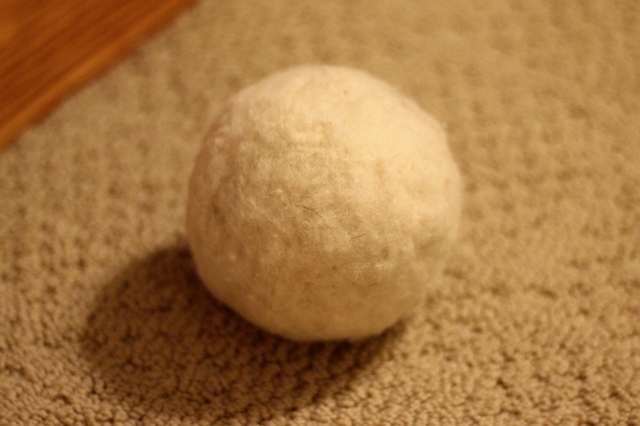
I’m in the process of sewing Ellie a Waldorf-style doll* for her birthday.  (Yes, her birthday is in 10 days and no, it will not be done in time.)  The first step was to needle felt wool stuffing into a ball for the head.  Several hours and a few needle holes in my fingers later, here it is.

Super exciting, isn’t it?

I’ve never needle felted anything before and I had no idea it would take so long to do this!  Being the amazing math guy that he is, Nik would say things like, “Oh, you have 9 inches [out of 12] of circumference done?  That’s great except that you have to cube what’s left in order to consider the volume of a sphere so you have WAY more to go.”  And then he’d give me the exact percentage that I had left, which was usually depressing.  To which I usually replied, “Thanks a lot, I like my fuzzy math better so I’m going to console myself with only have three inches left of circumference to achieve.”  Actually, it was kind of fun to use geometry in sewing, which is what Nik teaches!

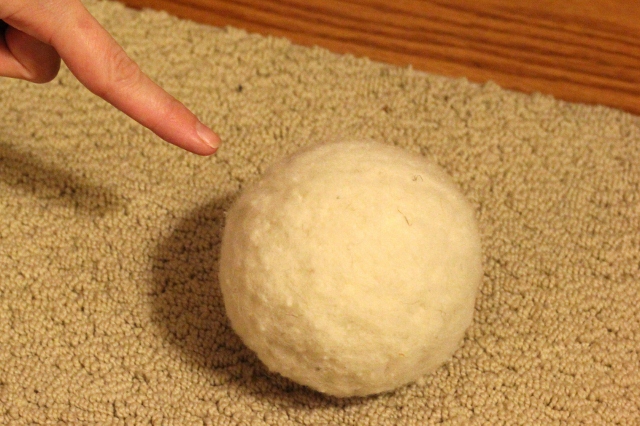
So here you have it, a “sphere” (not exactly) of approximately 12 inches in circumference, that will never be seen again, because it’s already covered in stockinette and soon will be covered with knit “skin” to make the head.

Doll-making is a whole new adventure for me!

P.S. If I ever am bored and I have nothing to do, I might be tempted (but probably not) to make another one of these balls just for Ellie to play with.  It had the nicest feel in my hand – a sort of warmth to it that made me just want to play with it.  I guess that’s what comes from using real materials in something, rather than plastic.

*I’m using the pattern for the Little Amigo doll from Growing Up Sew Liberated.

Posted in sewing | 6 Comments

Hard to Believe

But these pictures don’t lie – she’s almost two!

Posted in Ellie | Leave a comment

Someone is Very Interested in Doing Something

and so her mama better get with it and take advantage of this because wouldn’t it be nice to have it taken care of before the new baby comes?!?!?!?!?!

Success!

Posted in Ellie | Leave a comment

KIOS: Eating, Part 12: Fish, Other Seafood, Other Protein (the details)

This post is part of my series, “Kickin’ It Old Skool: Why and How We Are Old-Fashioned” or KIOS for short.  If you’re new to the series, please read my disclaimer before continuing on.  I’m keeping a table of contents to this series here so you can see what I’ve already written about and what more there is to come.

I grew up in Alaska.  Salmon is free for the catching for residents of Alaska.  There are seven people in my family.  As you might guess, we ate salmon all the time.  My parents caught and canned their own salmon every summer.  Mom has sixty million recipes for canned salmon.  We ate salmon so much that I remember begging to get to have canned tuna.  Very rarely, we got to have halibut if Dad went deep-sea fishing but basically, as a child, salmon was the only fish I really knew.

There are all kinds of other fish to catch in Alaska but I don’t remember eating much of that.  I just remember, salmon, salmon, salmon.  Specifically, from 8th grade on, I grew up eating Copper River red salmon, which is the cream of the crop of the salmon catch (debatable among salmon lovers I know but we think it’s the best!)  Let’s just say I have a finely tuned palate for salmon.  There’s really nothing better than Copper River red caught and grilled within the hour.

Not many people have that luxury though and I don’t any more either for that matter.  Now we make do with sometimes bringing home a little bit of salmon from my family, sometimes buying salmon (always wild-caught Alaskan) if it’s on sale at the grocery store, and usually buying canned wild Alaskan pink salmon from Trader Joe’s (the kind with the skin and bones in the can too).  (Shhh, don’t tell my family that I eat pink salmon now – they’ll be horrified.)  Actually, when canned, the pink salmon is pretty good and a much more affordable option for eating fish.

Don’t even get me started about how terrible farm-raised salmon is for the environment, how much worse the texture and taste is, and how much less nutritious it is for you. In a word – don’t buy it, don’t eat it.  I’d rather never eat salmon again than eat farm-raised salmon.

As for other seafood, we try to choose fish that is either responsibly wild-caught or responsibly farm-raised. (Wild-caught or farm-raised really does depend on the kind of fish – see my links below for helping figure that out).

We eat shrimp very rarely and when we do, we buy wild-caught, US raised shrimp (usually from the Gulf).  Remarkably, when in season, this shrimp is just about the same price as other shrimp we see at the store.  We consider shrimp a big treat; we rarely splurge on it and enjoy it very much when we do!

And of course, living in Maryland, there are crabs.  We hardly ever buy crabs but if we do, we make sure to buy Chesapeake Bay-caught blue crabs.  (And shhh, don’t tell anyone but I really don’t like crabs.  At least, I don’t like picking crabs.  I don’t love Old Bay either and so the combination of all that Old Bay and all that work for not much crab means that I don’t crave a crab feast.  Fine, call me an Alaskan and not a Marylander.  I do like a good crab cake though!)

***************

What about sushi?  We love sushi and we make it ourselves several times a year.  A few years ago, Nik and his friends taught themselves how to do it and it’s really fun.  We have stopped eating raw fish for sushi though because it’s impossible to get sustainably caught or raised raw sushi fish.  The two main types of raw fish used in sushi are salmon and tuna.  The raw salmon used for sushi is farmed.  The raw tuna used for sushi is being overfished and is almost always caught in nets that are terrible for the ocean and all the other kinds of fish and animals who live in it.

We couldn’t in good conscience continue to eat sushi knowing that the raw fish we were eating was so terrible for us and the environment.  Now, we make sushi using smoked Alaskan salmon, shrimp, and crab.  It’s still really delicious but it’s not the same as the raw stuff; I think Nik misses the raw sushi far more than I do.  Now, though, we know where the fish and seafood in our sushi comes from and can eat it without feeling guilty.

Yes, it is possible to get US pole-caught tuna but we haven’t found buy raw sushi-grade tune like that around here.  If we could find that, we’d probably add raw tuna back into our sushi menu.

If you ever want to learn how to make your own sushi, let me know!  We’d be happy to teach you how – it’s really quite easy and very fun!

***************

About other proteins, well, right now I can’t think of any other main sources of protein that we eat (other than nuts which I’ll talk about in another post).  I did want to address what we don’t eat though:  soy.  Soy is a very common source of protein for anyone who doesn’t eat meat (and for most meat eaters also).  We avoid soy as much as we can.  We do use soy sauce and eat mayonnaise that has soybean oil in it but other than that, we don’t really have any soy in our house.   I know that this is a really contentious subject and there is a lot of conflicting information out there about the pros and cons of eating soy.  Clearly, this is an area where you have to read and decide for yourself what to believe and what to do.  For us, here’s a short summary of why we avoid soy:

  • It’s practically impossible to get soy products that are not made with genetically modified soy (and we try to avoid GMOs).
  • Soy is quite indigestible and high in anti-nutrients unless it has been prepared traditionally (as in truly fermented tofu, not the commercially-produced tofu that is widely available)
  • Soy is also high in phytoestrogens, which interferes with the human body’s endocrine system.

If you eat processed food of any kind, soy is really hard to avoid.  It’s in almost every thing in one form or another.  It’s another good reason to follow the food rules.

***************

A great book for understanding the world of fish:  Four Fish: The Future of The Last Wild Food by Paul Greenberg

A great pocket guide for what fish to buy (you can choose the one for your part of the country), from the Monterey Bay Aquarium.  This guide will help you decipher when it’s best to buy wild-caught fish vs. buying farm-raised fish, and when it’s best to avoid a particular species altogether.  It doesn’t tell you why each fish is rated the way it is.  For that, you’ll need to do more research.  It does, however, help you when eating at a restaurant or shopping for raw fish to make better choices.

An extensive summary of research on soy and why we avoid it.

We like to buy our crabs and other seafood from Conrad’s Crabs and Seafood Market.

Posted in cooking, KIOS | Tagged , , , , , , | 2 Comments

Fall Flowers, Fall Clothes

It may be getting up into the 80s during the day but it’s getting blessedly cool at night.  I feel much happier about being pregnant these days!

We’ve broken out the fall clothes (pants) and the fall flowers are blooming.

I love fall!

It’s not fireweed but I like to pretend that it is!

Posted in Ellie, gardening, weather | Leave a comment

My New Favorite Way to Eat Eggplant

Actually, this is my only favorite way to eat eggplant.  I don’t love eggplant and in most recipes, I just tolerate it.  We’ve been making this a lot this summer though and I love it.  It’s so easy to make, needs very few ingredients, keeps well in the refrigerator, and you feel virtuous for eating a lot of a vegetable.  There’s something about the creaminess of the eggplant combined with the garlic and vinegar that is just so good.  So make melitzanosalata today!  (And do it quickly because eggplant won’t be in season for much longer!)

Melitzanosalata (traditional Greek Eggplant Salad)

a 1 pound eggplant (approximately)*

Wash the eggplant well.  Roast it whole on the grill or in the oven (rotating a few times) until the eggplant is completely soft.  You want it to look totally collapsed like this:

We usually try to roast the eggplant on a night when we’re grilling other stuff.  It usually takes about 30+ minutes; by the time our dinner is grilled, the eggplant is usually getting close.

As soon as possible, cut open the eggplant and take the flesh out of the skin.  It’s best not to let it cool in the skin because the eggplant can turn brown.  Allow the eggplant to cool completely.

After taking off all the skin.  I used an fairly large eggplant this time so you can see there are a lot of seeds.  If you don’t like the seeds, then just cut out the worst of them before continuing with the recipe. 

For the rest of this recipe, start with the smaller amounts and then add more as necessary.

3-4 T (or more) of high quality extra virgin olive oil (the better the oil, the better this will taste)

Using a hand-held electric mixer** on medium speed, gradually add the oil to the eggplant until the oil is well blended and the eggplant is smooth and creamy.

1-2 T red wine vinegar
1/4 – 1/2 tsp salt

several grinds of fresh black pepper
1-2 cloves of fresh garlic, finely chopped***

Add and blend until well-mixed.  At this point, taste for seasoning.  I inevitably add more salt, pepper, oil, and vinegar!

We find that this tastes the best after it has sat in the refrigerator for a day.  Serve cold or at room temperature with warmed pita and chunks of tomato.  Enjoy!!

***************

*This recipe is easily doubled.  We always make two eggplants worth of this because it lasts for easily a week or more in the refrigerator and we love it.  If you’re going to grill one eggplant, why not grill two? 🙂
**You can also just use a spoon but an electric mixer is much easier.
***Traditional melitzanosalata is VERY garlic-y.  Add garlic to taste – I like it on the slightly less-strong side.

Posted in cooking | 1 Comment

Someone’s Mama Clearly Spends Too Much Time On The Computer

Posted in Ellie | Leave a comment

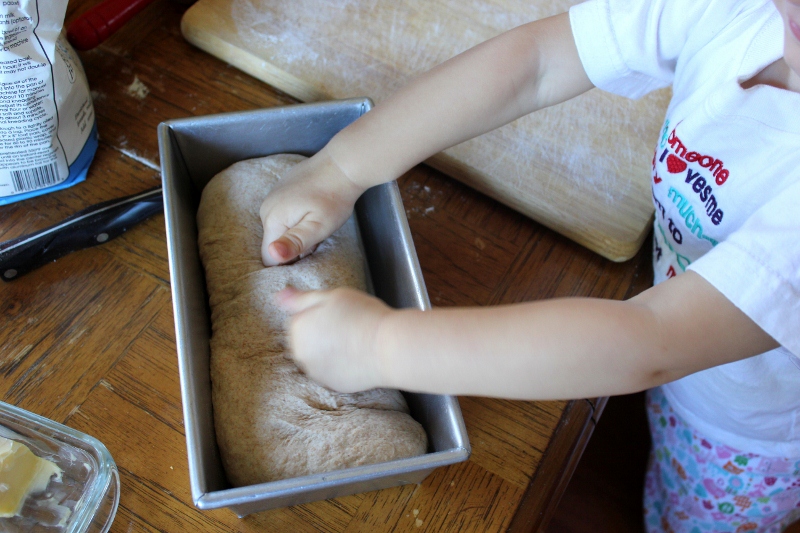
Learning How To Make Bread

Sometimes Ellie scares me a bit with what she knows and understands.  For example, this morning I said, “OK Ellie, our bread dough is ready so let’s go make bread.”  She immediately walked into the kitchen and pointed at the cupboard where we keep the loaf pans!  She knows everything!!  She pointed for the rolling pin, pointed at another cupboard for the bench scraper, carried the flour to the table, helped me grease the pans, and followed along with every step.  Clearly she has been observing my every move!

Here she is practicing rolling:

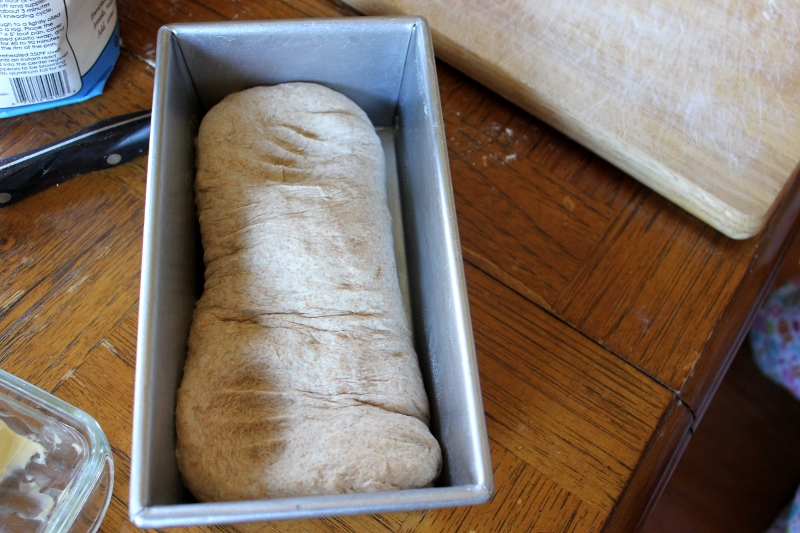
I’m also teaching her how to form the loaves and put them into the pans.  I’m trying to get her to use her knuckles, not the ends of her fingers and for the most part, she’s getting pretty good at it!

Aren’t those little finger marks adorable?

My goal is to have her baking all the family’s bread by the time she’s six! (Insert diabolical slave labor evil laugh here!)  Seriously though, at the rate she’s going, she’s going to be a master bread baker in no time.  Awesome!

Posted in cooking, Ellie | 4 Comments

KIOS: Eating, Part 11: Meat (the details)

This post is part of my series, “Kickin’ It Old Skool: Why and How We Are Old-Fashioned” or KIOS for short.  If you’re new to the series, please read my disclaimer before continuing on.  I’m keeping a table of contents to this series here so you can see what I’ve already written about and what more there is to come.

Several years ago, Nik and I started learning about the world of industrial meat.  We learned about concentrated animal feeding operations (CAFOs) – how the vast majority of meat animals in the USA are raised.  We learned about the razor thin edge of profit that pushes commercial animal producers to feed their animals antibiotics they don’t need so that they’ll grow bigger faster.  We learned about the living conditions that the animals were forced to live in, for their entire lives, until they were brutally and inhumanely slaughtered.

We learned about the unnatural food that animals are fed, food that causes them to grow large quickly but that also causes their bodies to putrefy and change from the inside out, creating deadly bacteria strains that can infect humans.

We learned more than enough to know that we wanted to remove ourselves from the cycle of torture, pollution, and egregious waste of resources that industrial and mass-produced meat perpetuates.  We could no longer, in good conscience, spend our money on a product that was so degrading to the animals, the workers, and the environment.

Essentially, this meant that we would only buy meat from farmers (local or otherwise) we trusted to raise their animals humanely, in the way that animals are meant to live.  We didn’t want to rely on labels such as “grass-fed” or “free-range”, because those labels are loosely regulated and in many cases, useless in telling you the truth about how the animals are raised.

It is far more expensive to buy meat this way than from the grocery store (often at least 2-3 times as expensive.)  We decided that we would prefer to not eat meat than buy the industrially-produced stuff that is sold everywhere.  If buying responsible meat meant that we ate half as much meat as we did before, then so be it.

This means that we have changed the way we eat.  We buy much less meat and then stretch that meat as far as we can.  For us, meat is usually more of an accent to our meal than the main idea.  This is the way the vast majority of the world eats meat.

Four years later, I am still learning how to stretch our meat even farther.  Even when we do eat a meat-heavy main dish like hamburgers, we usually make 4-5 hamburgers from a pound of meat, meaning that our hamburgers are much smaller than a typical burger.  We also strive for many meals a week that do not contain any meat at all.  We eat way more beans and lentils than we used to.

We are still not perfect in this regard.  Eating out has been difficult for us.  We have friends who will only eat vegetarian meals (even at restaurants or out with friends) unless they are sure of the source of the meat they are eating.  We’re not there yet (and I’m not sure if we want to get that far).  I still think we eat more meat than we need to.  We don’t eat soy (more on that next week) and, as with eggs, I have struggled to find consistent sources of protein for my pregnant/lactating body that keep me feeling healthy and whole.

We do eat fish and I’ll also write about that next week.

***************

Where we buy our meat:  We buy most of our meat (beef, pork, chicken) from the same farmer as our milk and eggs.  Additionally, when we splurge on some lamb, we buy that from the farmers’ market.  Finally, we’ve been blessed by friends who give us venison from time to time.

***************

The topic of industrial meat is vast.  If you’d like to learn more, here are several good places to start:

Food Inc. (a documentary film)

Power Steer (an article by Michael Pollan)

The Omnivore’s Dilemma by Michael Pollan

Understanding Concentrated Animal Feeding Operations and Their Impact on Communities (PDF)

Posted in cooking, KIOS | Tagged , , , | 3 Comments